
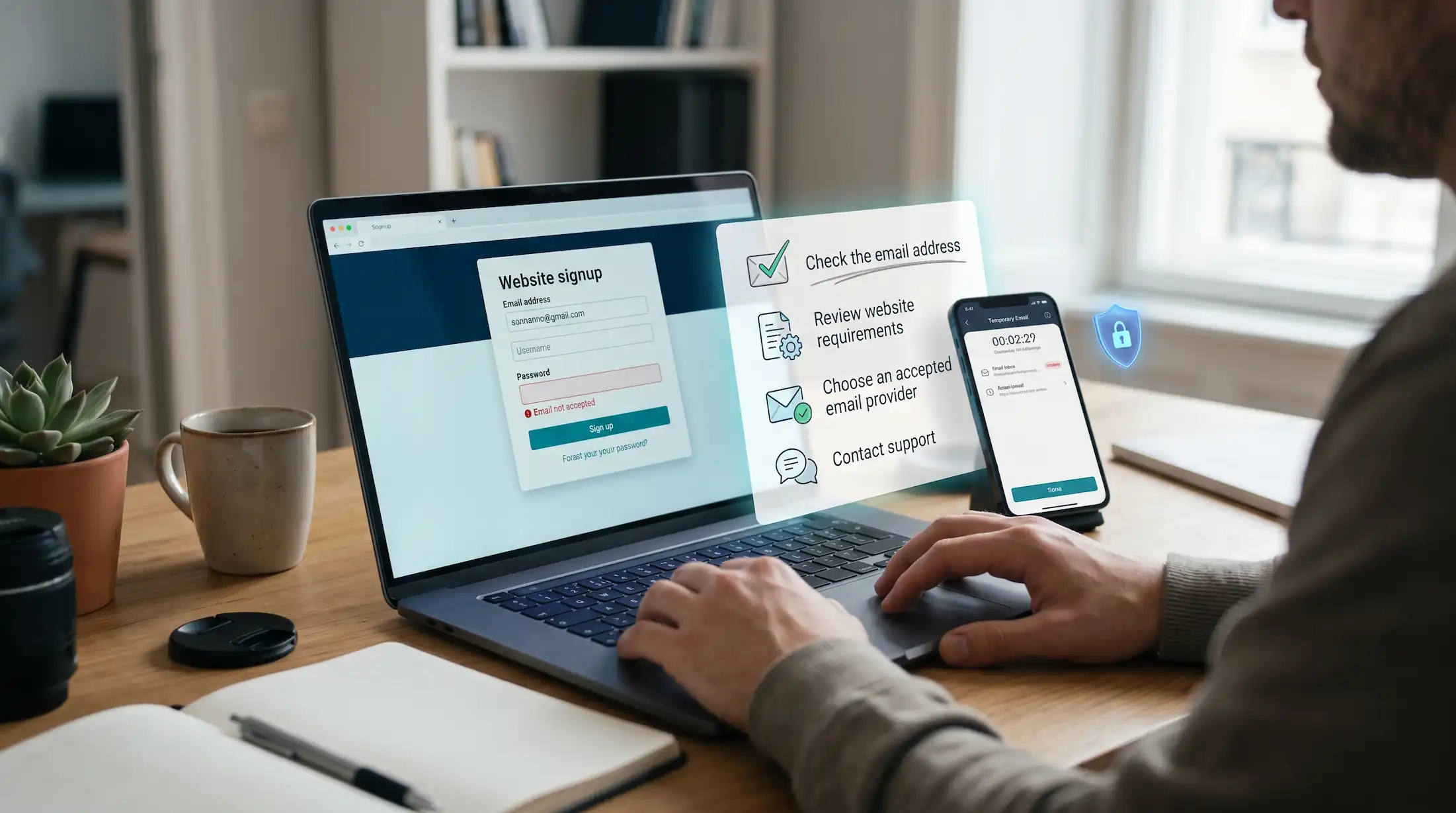
You paste in a temporary address, hit sign up, and get a red error: "Please use a valid email address." The address works. You can see the inbox right there. So what's going on?
The site is blocking disposable email on purpose. It's more common than it used to be, and once you understand why, it gets much easier to decide what to do next.
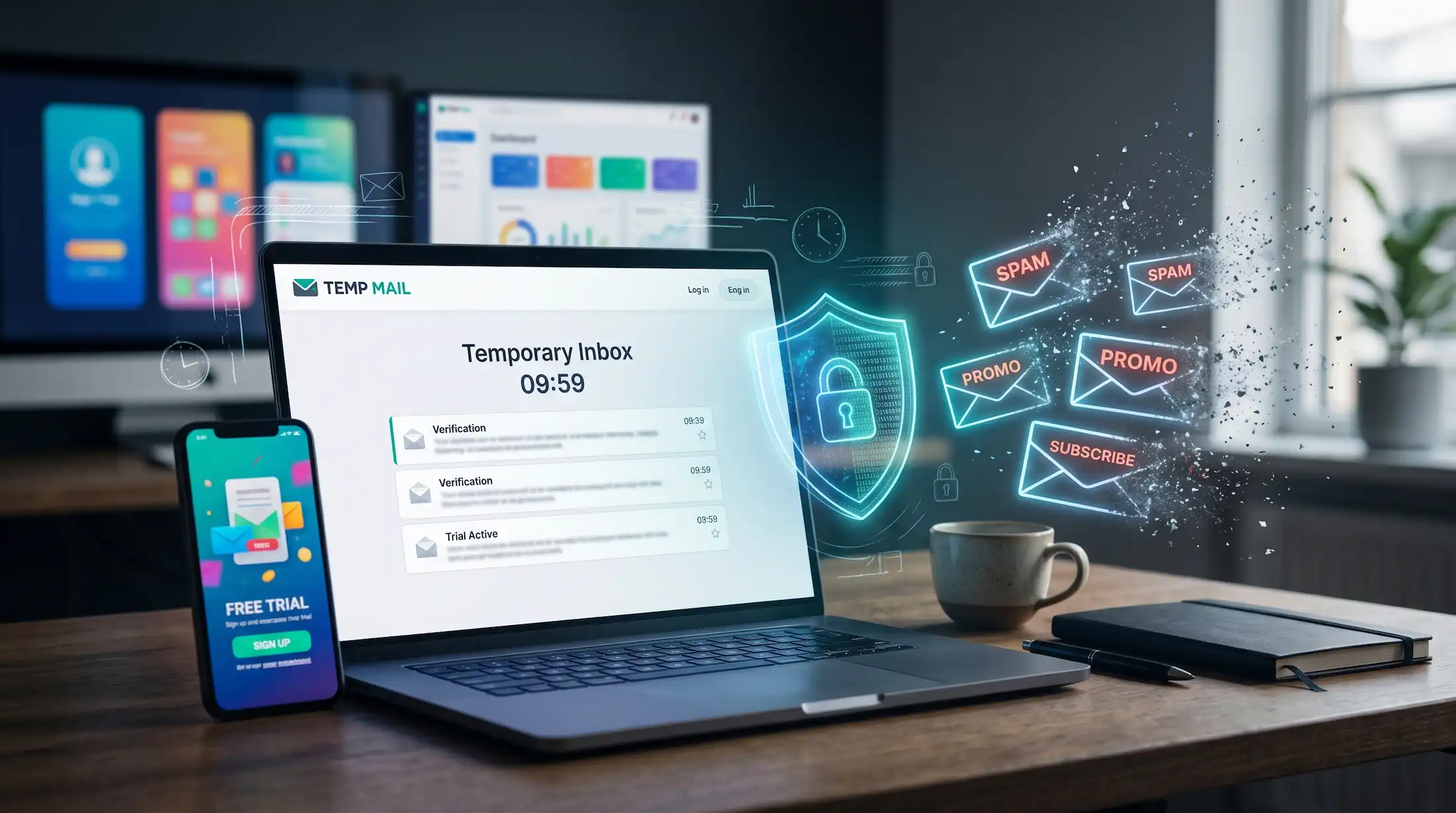
How Websites Detect Temporary Emails
Most of the time it's not clever. Sites usually rely on one or more of these checks:
- Domain blocklists. Public and commercial lists track thousands of domains used by disposable email services. If your address's domain is on the list, the form says no.
- Email validation services. Some sites pay a third-party API to score each address during sign-up. These services flag disposable, risky or newly created domains.
- Mail server checks. The site looks up the domain's mail server records and compares them against known temp mail providers.
- Behaviour patterns. Lots of sign-ups from the same domain in a short time can trigger an automatic block.
Why Websites Block Disposable Email
It's easy to assume they just want to spam you. Sometimes that's part of it, but usually there's a real reason.
1. Stopping free-trial abuse
If you can make a new account in ten seconds with a new address, you can get a new free trial every week forever. Services with expensive free tiers, like AI tools or streaming, are especially strict about this.
2. Fighting fake accounts and bots
Spammers and bots use disposable addresses to create accounts in bulk for fake reviews, comment spam or referral fraud. Blocking those domains is a cheap first filter.
3. Account recovery
A bank, marketplace or social network needs to reach you if your account is hacked or you forget your password. An inbox that disappears in an hour makes that impossible, so they ask for something permanent. Honestly, this one protects you.
4. Marketing
Yes, some companies simply want an email they can market to. If a newsletter or coupon page blocks temp mail, that's usually why.
What to Do When Temp Mail Is Blocked
You have a few honest options, depending on how much you trust the site and how long you'll use it.
Use an email alias
Alias services such as Firefox Relay, DuckDuckGo Email Protection, SimpleLogin or Apple's iCloud Hide My Email create a unique address that forwards to your real inbox. Sites rarely block them, you still receive the emails, and you can turn the alias off if it starts getting spam. This is the best option for accounts you'll keep.
Try Gmail's plus trick
If you use Gmail, you can add a plus sign and a word to your address, like yourname+shopname@gmail.com. Mail still reaches you, and you can filter it or see who shared your address. It doesn't hide your real address, though, so it's more about sorting than privacy.
Keep a separate sign-up inbox
A free secondary email account just for shopping, newsletters and sign-ups keeps your main inbox clean. It's low-tech and it works everywhere.
Ask yourself if the site deserves your real email
For banking, healthcare, government services, work tools and anything you'd hate to lose, your real email is the right answer anyway. Temp mail was never a good fit there.
What Not to Do
Don't treat a block as a puzzle to beat. If a service has decided it doesn't want disposable addresses, cycling through domains until one slips through is getting around their rules. It can also get your account closed later. For more on where the line sits, see is temp mail illegal?
Where Temp Mail Still Works Best
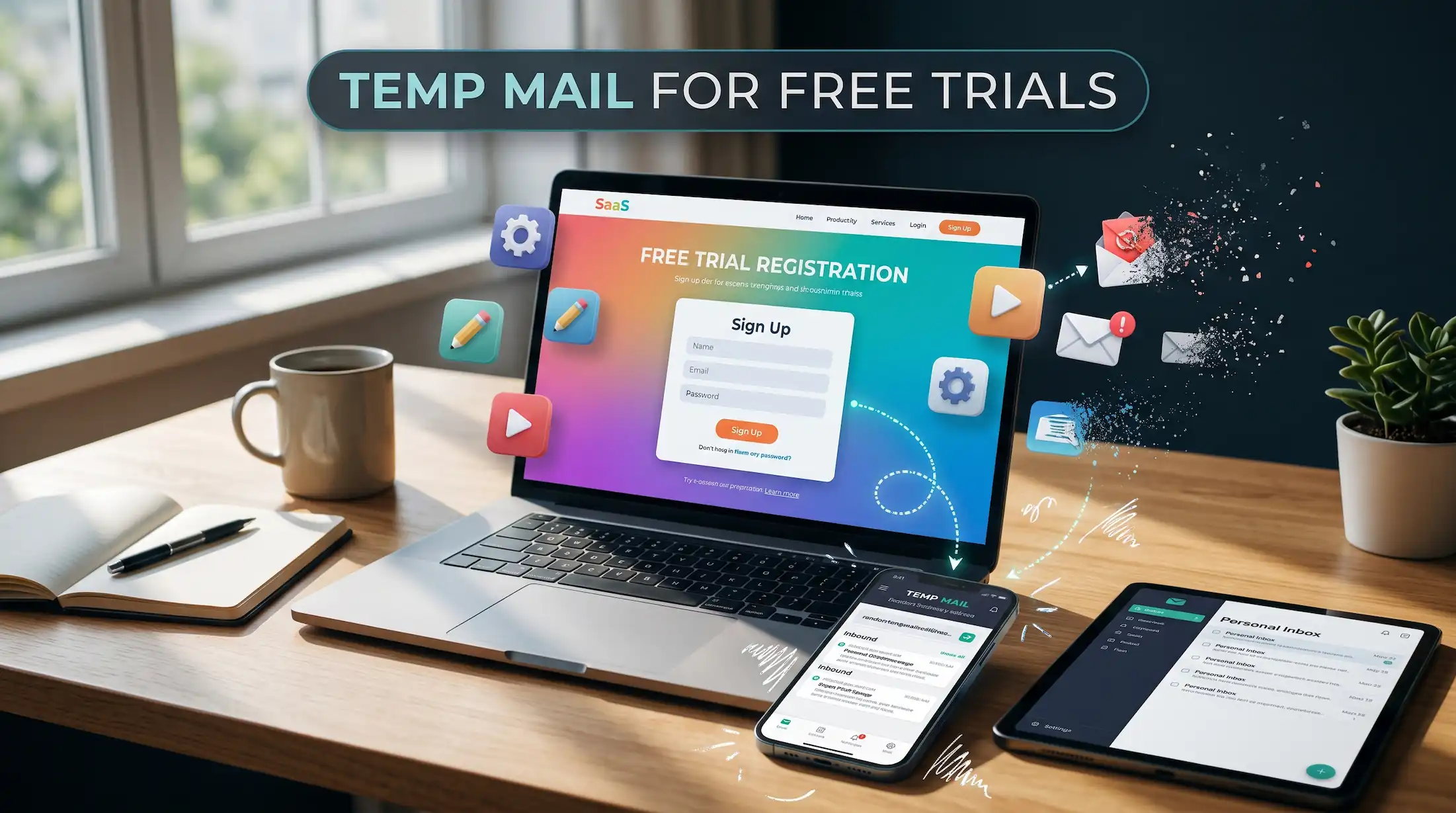
Plenty of sites don't block disposable email at all, and that's where a temporary address really shines: one-time downloads, gated articles, Wi-Fi login pages, coupon sign-ups and testing apps you might not keep. We wrote about this in the hidden cost of "free" offers and coupons.
A good setup for most people is a mix: Temp Mail .FYI for throwaway sign-ups, an alias or secondary inbox for semi-permanent accounts, and your real address for anything important.
The Bottom Line
When a site blocks temporary email, it's usually trying to stop abuse or make sure it can reach you later. You don't have to give up your privacy, though. Switch to an alias or a secondary inbox, and save temp mail for the places where a one-time address makes sense.

Frequently Asked Questions
Why does a website say my email is invalid when it works?
Many sites check the domain against lists of known disposable email providers. If the domain is on that list, the form rejects it even though the inbox works fine.
Is it legal for websites to block temporary emails?
Generally, yes. A website can set its own sign-up rules. Likewise, using temp mail is legal as long as you aren't breaking the law or committing fraud.
What's the best alternative when temp mail is blocked?
An email alias service or a separate sign-up inbox. Both use domains that are rarely blocked, and you can still read the emails later.
Should I try lots of different temp domains until one works?
If a site clearly doesn't want disposable addresses, it's better to respect that and use an alias or secondary inbox instead of trying to get around the block.
Follow our other blogs CONTENTCRAZE
See our Instagram CONTENTCRAZE
